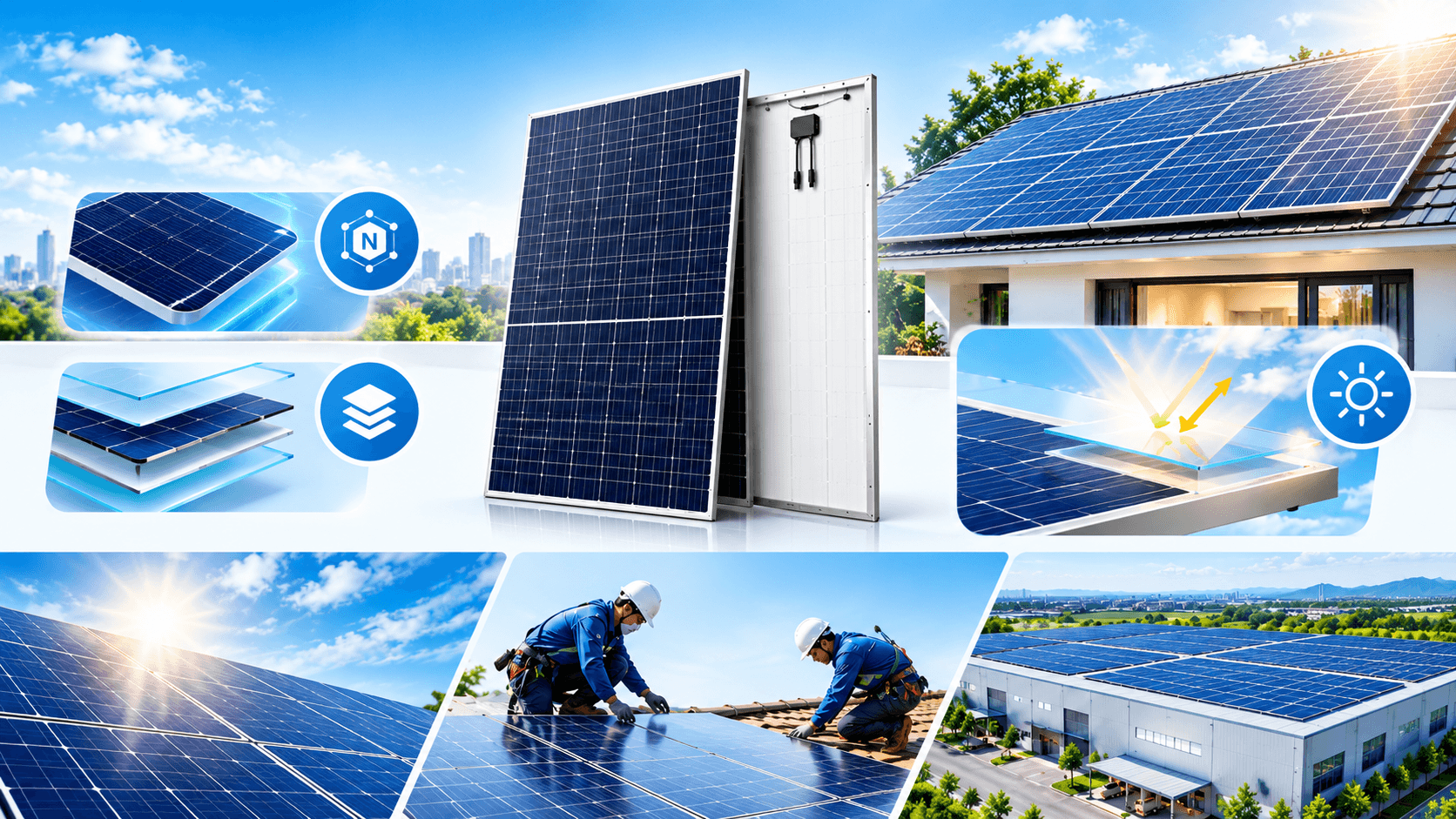
Factories have large roofs and high daytime power consumption, making them an ideal setting for rooftop solar. However, for the system to run durably and efficiently, investors need to prepare carefully before construction.
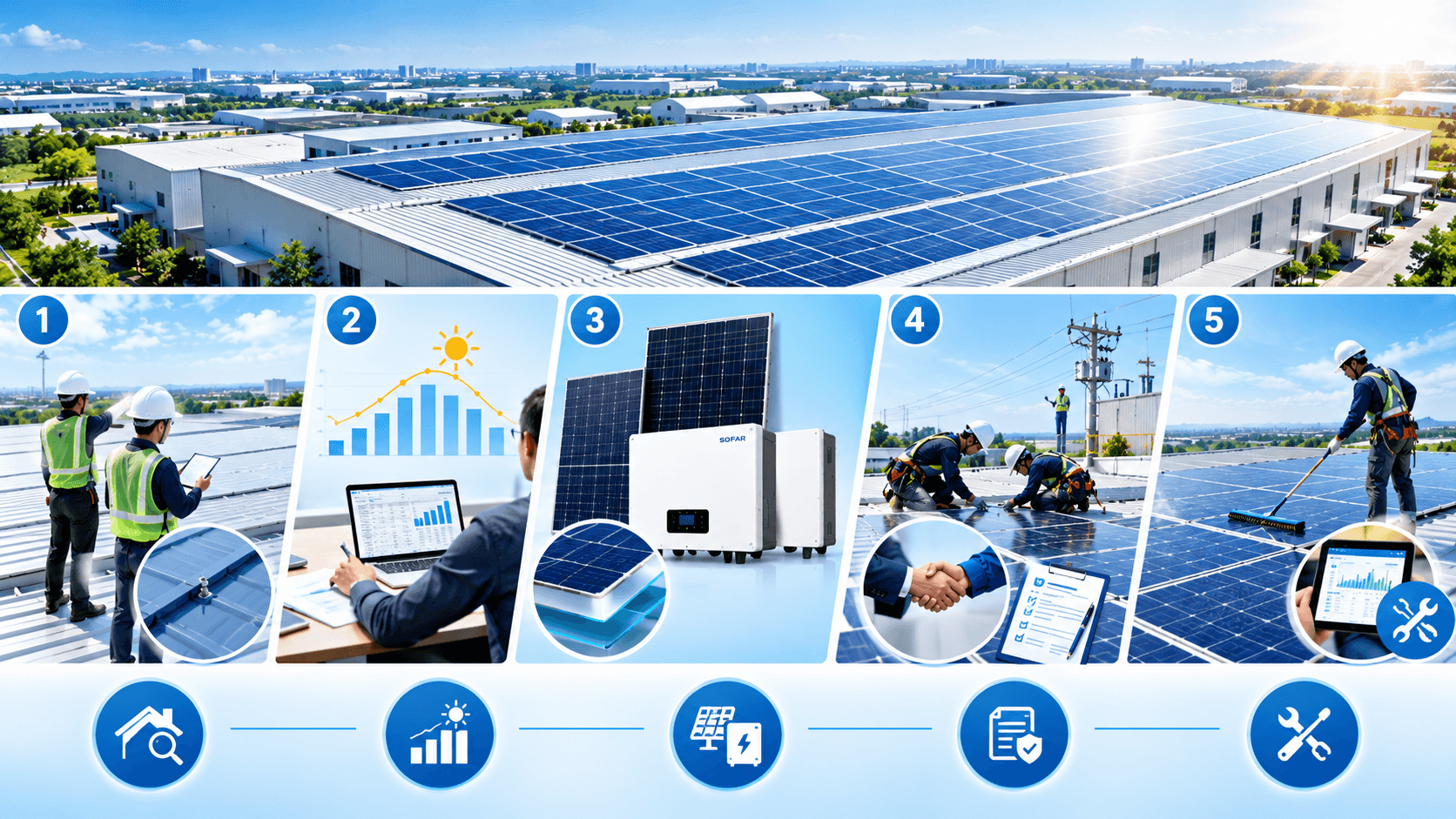
1. Survey the roof structure and condition
First, determine the roof type (metal sheet, tile, concrete), its age and its load-bearing capacity. A deteriorated roof should be repaired or waterproofed before installation to avoid having to dismantle the system later.
What engineers usually check
- Allowable load of the trusses and purlins.
- Roof orientation, slope and shading from trees and neighboring structures.
- Locations for the inverter, electrical cabinets and cable routes.
2. Determine demand and capacity
System capacity should be based on the factory's load profile, especially daytime consumption. A system that is too small does not make full use of the roof, while one that is too large may generate surplus that goes unused. Work with a consulting company to calculate based on actual electricity bill data.
3. Choose suitable PV modules and inverters
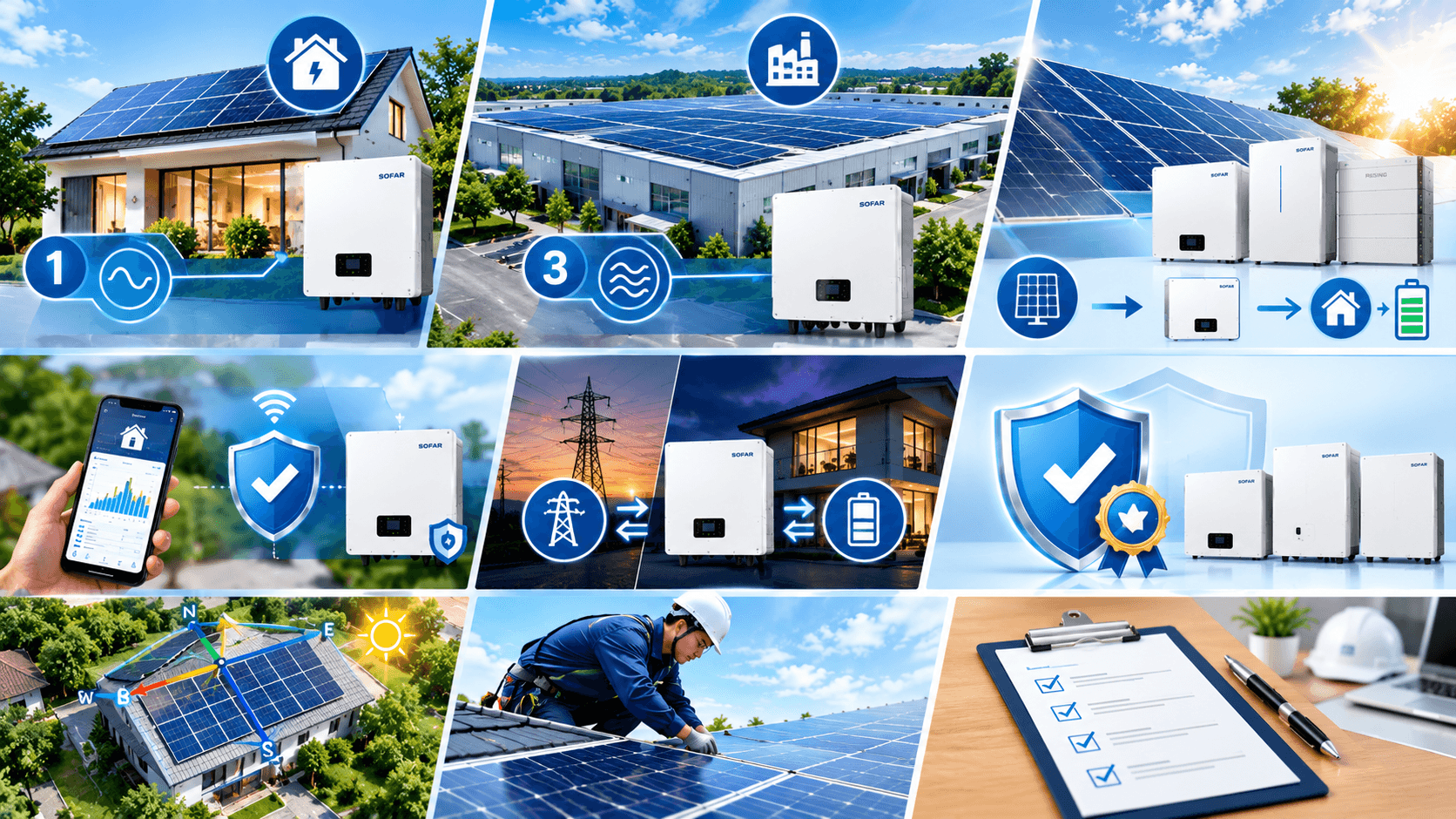
For three-phase projects, SOFAR three-phase grid-tied inverters are a familiar choice, with many power ratings to match the project scale. TRINA N-type TOPCon dual-glass PV modules come with a performance warranty of over 80% for 30 years and a 12-year product warranty, giving investors confidence in long-term operation.
Consider zero export
Some projects need to limit or avoid feeding power back into the grid. In that case, choose an inverter that supports the zero export function and discuss connection requirements with the utility.
4. Comply with safety rules and grid connection procedures
Installation requires an experienced contractor who complies with electrical safety and work-at-height regulations. Investors should learn the grid connection procedures and agreements with the utility under current regulations before commissioning.
5. Warranty and maintenance
Make the equipment warranty policy clear: defective products are replaced 1-for-1, and inverters carry a 5-year or 10-year warranty depending on the model. You should also have a plan for periodic PV module cleaning and inspection so output stays stable over time.
Summary
- Survey the roof, structure and shading.
- Size the capacity to daytime power demand.
- Choose equipment with a clear warranty.
- Complete grid connection procedures before commissioning.
- Plan periodic maintenance.
DJ SOLAR is ready to support contractors and investors with equipment, volume-based price lists and configuration advice. Contact the Sales Department for support.